
Description
Your cat hardly drinks. And that is completely normal.
You move the water bowl, buy a drinking fountain, try a shallower dish – and still you rarely see her drink.
It is not about the dish. The domestic cat descends from the African wildcat, a desert animal. Its sense of thirst is weak compared to a dog's, because its ancestors obtained most of their water from prey – a prey animal is around two-thirds water.
In a cat that mainly eats dry food, exactly this share is missing. She only partly makes up for it at the bowl. That is not an illness and not an emergency, but it is a difference that adds up over years – and it is the reason why regular veterinary blood checks are recommended for cats from middle age onwards.
Why we deliberately limit the omega-3 amount
Here we depart from what the market usually does.
For dogs, the rule is: more EPA and DHA is – within sensible limits – usually better. For cats the situation is different. In the scientific literature, effects on blood clotting and heart rhythm are discussed at high omega-3 amounts. The sensible amounts examined for cats are considerably lower than for dogs.
That is why the daily amount of 2.0 ml delivers around 171 mg EPA + DHA – at the lower, safe end of the examined range. Not because more would be more expensive. But because in this species, more is not automatically better.
A product advertising the highest possible omega-3 numbers sells more easily. We consider the other decision the right one.
What is in the bottle – and why
| Active ingredient | Why this one exactly |
|---|---|
| Salmon oil and algae oil (EPA + DHA) | Two sources instead of one: algae oil supplies DHA independently of fish and is particularly clean. Both oils come with peroxide and anisidine values in the certificate of analysis – rancid oil does not make it into our formula. |
| Taurine | Essential for cats. Unlike dogs, they can hardly produce it themselves – it must come from food. |
| B complex, complete (B1, B2, B3, B5, B6, B9, B12, biotin) | B vitamins are water-soluble. What the body does not need immediately is excreted in the urine. For cats that produce a lot of urine, a regular supply therefore makes sense. |
| Potassium citrate | Involved in the acid-base balance. |
| Prebiotics (inulin + FOS) | Food for the cat's own gut flora – not to be confused with probiotics. |
| Coenzyme Q10, vitamin E, vitamin C, olive polyphenols | An antioxidant system that protects the sensitive fatty acids. |
Free from chicken, grain, gluten and soy protein. No BHA, BHT or ethoxyquin. The flavour is deliberately chicken-free – chicken is among the most common feed intolerances in cats.
Dosage: once daily over the food
| Weight | Daily amount |
|---|---|
| up to 2 kg | 0.5 ml |
| 2–4 kg | 1.0 ml |
| 4–6 kg | 1.5 ml |
| over 6 kg | 2.0 ml |
A maximum of 2.0 ml per day. This upper limit is not a precautionary formula but the reason described above. Please do not exceed it.
Shake well before use. Cats are particular: start with half a drop under the usual food and increase over a few days, rather than offering the full amount on day one.
Contents, bottle, shelf life
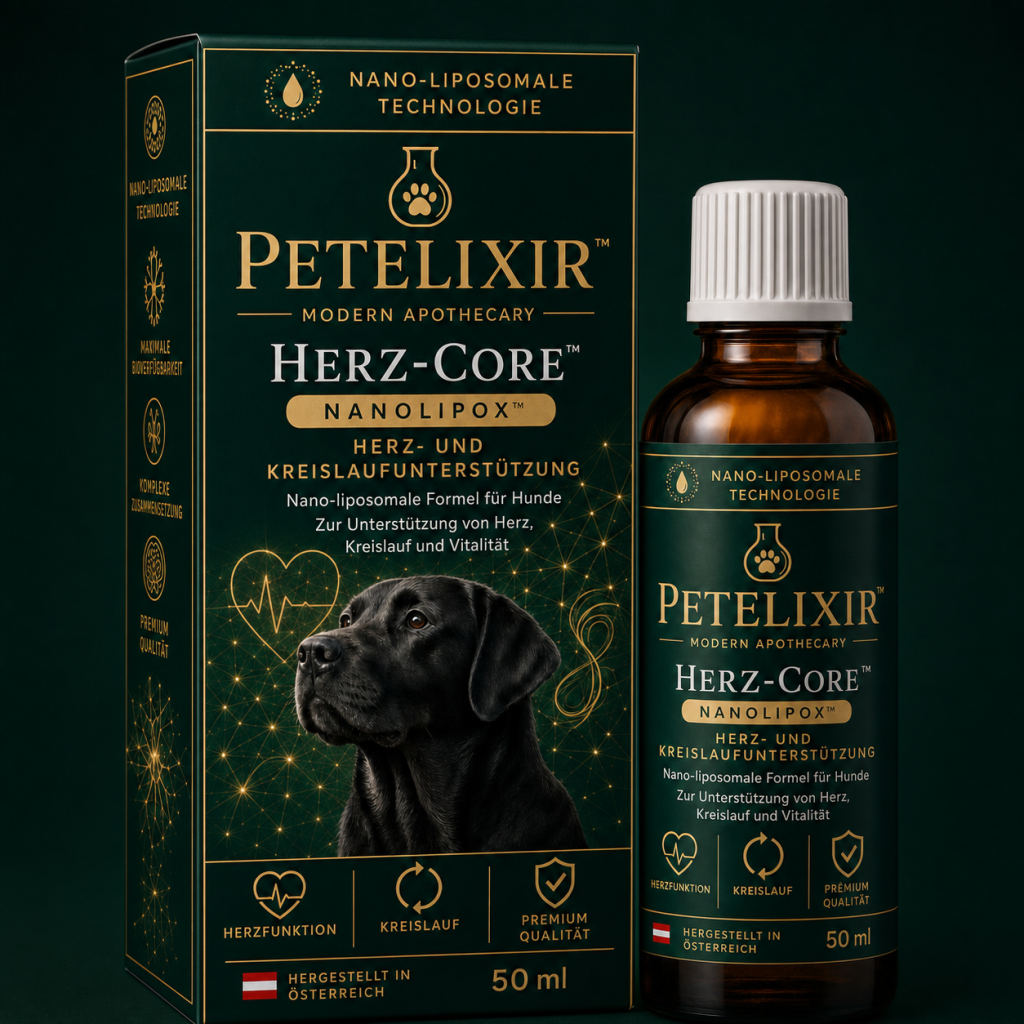
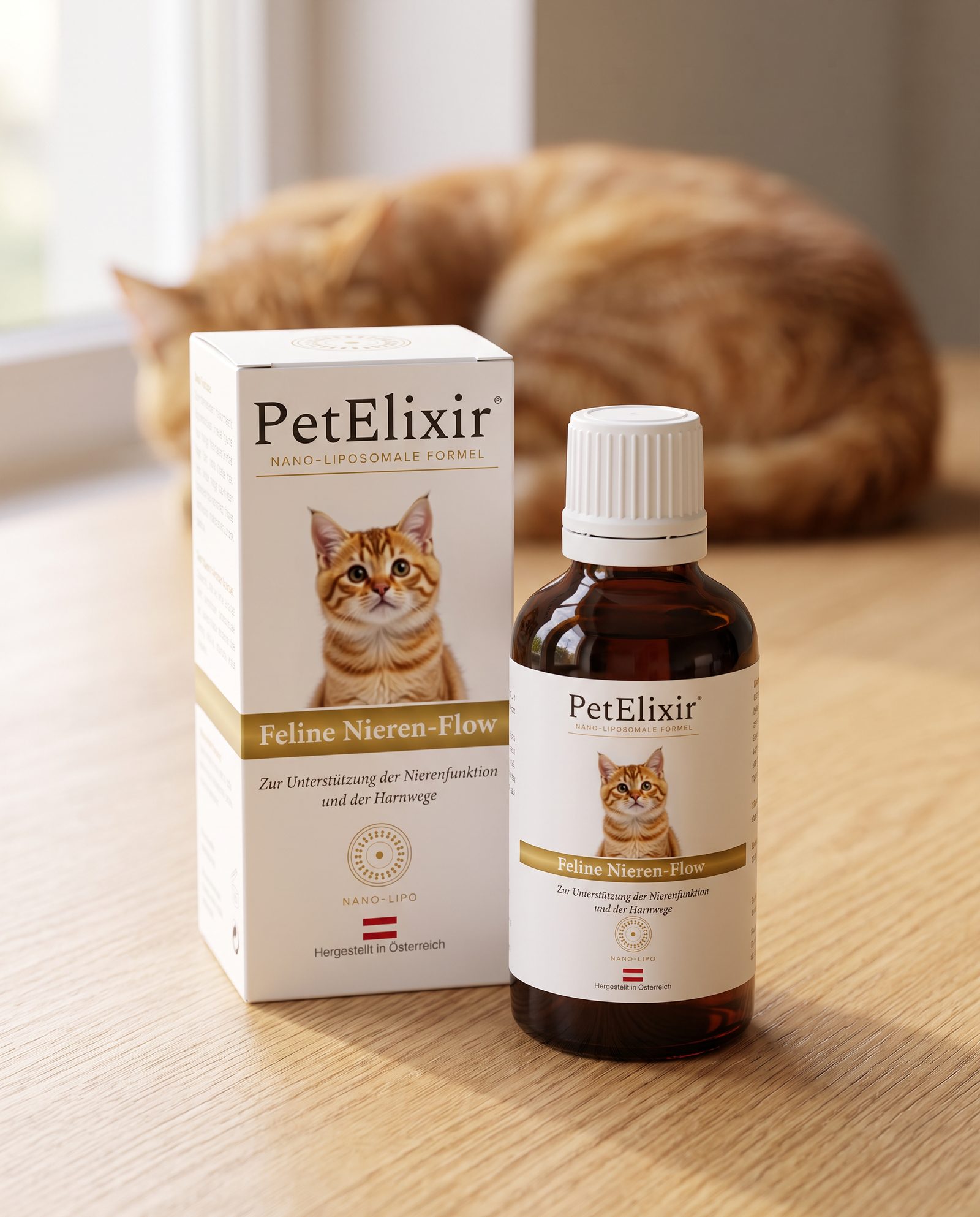
50 ml amber glass with 0.5 ml dosing pump and measuring cup – the small pump, because at cat-sized amounts half a millilitre of difference already matters.
Bottled under nitrogen. Unopened, 12 months at 2–8 °C, after opening use within 8 weeks. Do not freeze.
Reserve now
Shop opening: September 2026. Without obligation, no order, no payment commitment.
Frequently asked questions
Why does my cat drink noticeably more water?
Increased thirst is often an early warning sign and should be checked by a vet. Nieren-Flow™ can nutritionally support kidney function alongside.
When is a cat's water consumption unusual?
Drinking considerably more than usual over several days is a reason for a veterinary check.
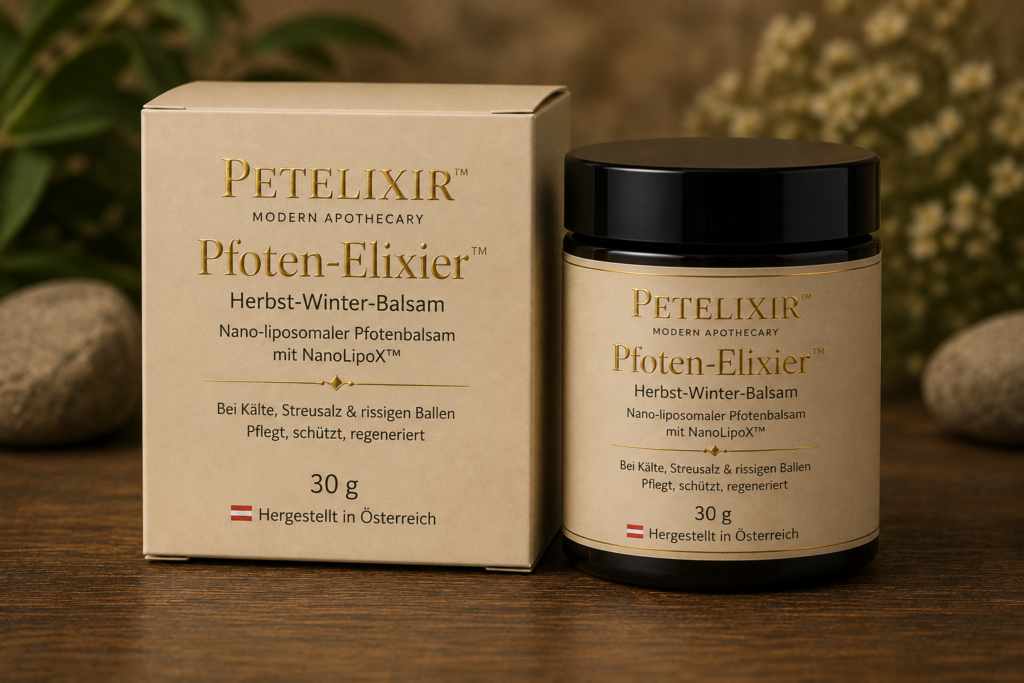
Newsletter advantage: 1× Pfoten-Elixier™ balm FREE
With your first order from September – plus first access before everyone else. Every batch is produced in small, controlled numbers.